
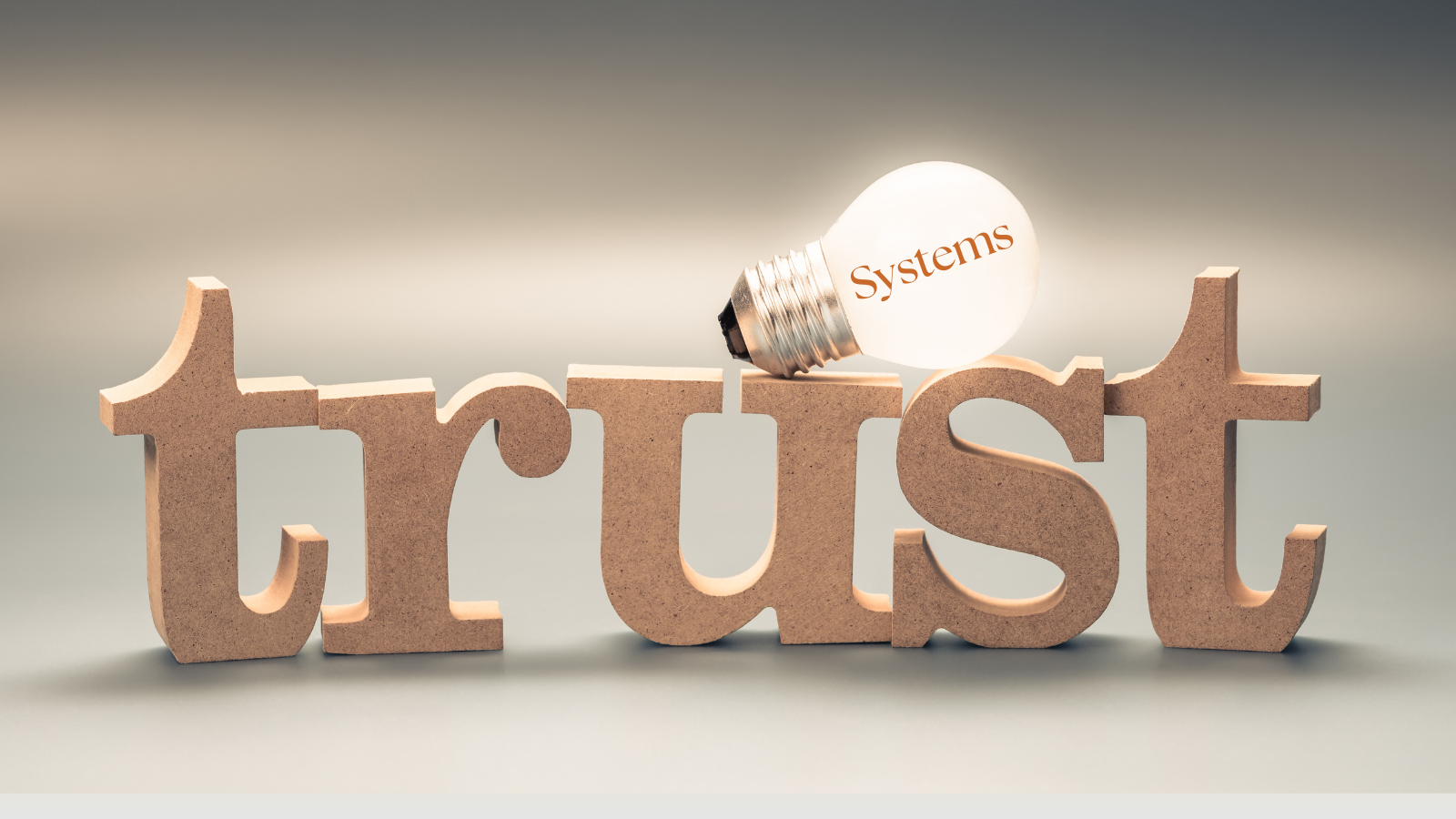
High-performing leadership systems don’t depend on constant intervention. They shape trust, decision-making, and results through the structures leaders put in place long before problems appear.
Leadership systems that make trust and results inevitable don’t rely on charisma, pressure, or constant intervention. They work because they shape how people behave when no one is watching—how decisions are made, how risk is surfaced, and how truth moves through the organization.
What if trust and results weren’t things leaders had to constantly push for—but outcomes their systems quietly produced?
Most leadership conversations still revolve around effort. Leaders are encouraged to work harder, communicate more clearly, and hold people accountable. When performance dips, the instinct is to apply more pressure or tighten control. But leaders who’ve been in the seat long enough begin to notice something else. When trust erodes or results stall, it’s rarely because people stopped caring. It’s because the system made the right behaviors harder than the wrong ones.
When Effort Isn’t the Problem, but the System Is
In many organizations, people are doing exactly what the system has trained them to do. They protect themselves. They delay raising concerns. They soften truth. They wait for permission. None of this shows up in job descriptions or values statements, but it shows up in daily behavior.
When speaking up feels risky, silence becomes efficient.
When decision ownership is unclear, hesitation looks like alignment.
When early warning signs are ignored—or punished—teams learn to absorb risk quietly until it becomes expensive.
By the time metrics reflect the damage, the real breakdown has already occurred.
Why Metrics Lag Behavior
One of the reasons leadership systems fail quietly is that organizations over-trust metrics and under-examine behavior. Dashboards, KPIs, and performance reports are lagging indicators. By the time numbers signal a problem, teams have often been compensating for weeks—or months—through workarounds, silent trade-offs, and unspoken agreements.
Behavior tells the story sooner. Who hesitates before speaking? Where do decisions stall? Which risks are absorbed quietly instead of surfaced openly? These patterns show up long before financials, delivery timelines, or engagement surveys reflect the cost. Leaders who learn to read behavioral signals don’t wait for proof; they respond to early friction while it’s still inexpensive to address.
This is where leadership systems either help or hinder. When systems make it unclear who owns the truth, metrics become a shield instead of a signal. When systems normalize early dialogue, metrics become confirmation—not surprise.
The Fixer Trap: When Leadership Systems Create Bottlenecks
I’m thinking of a leader I’ve worked with for years—sharp, credible, deeply committed. Early in their career, they were the person everyone relied on to “fix things.” When projects wobbled, they stepped in. When tensions surfaced, they smoothed them over. When results mattered, they carried the weight themselves.
From the outside, it looked like strong leadership.
From the inside, it was exhausting.
This leader didn’t lack skill, authority, or trust. But the organization had quietly taught people that escalation happened late—and usually landed on their desk. Decisions traveled upward instead of outward. Accountability lived in individuals instead of systems. Progress depended on presence.
At first, this kind of leadership feels noble. Necessary, even. Over time, it becomes unsustainable.
The Question That Redesigns Leadership Systems
The shift didn’t come from learning a new technique or adopting a new framework. It came from seeing leadership differently.
Instead of asking, “How do I get people to perform?”
this leader began asking, “What behaviors does our system reward—and which ones does it quietly discourage?”
That question changed everything.
Meetings became places where assumptions were surfaced, not just decisions made. Documentation clarified ownership instead of obscuring it. Risk was named earlier, not after damage was done. Truth no longer had to climb the hierarchy—it had pathways.
What changed wasn’t effort. It was design.
When Leadership Systems Remove the Bottleneck
Over time, something subtle but powerful happened.
The leader stopped being the bottleneck.
Teams began raising concerns earlier—not because they were told to, but because it was safe and expected. Accountability became clearer, not harsher. Decisions traveled faster because ownership was visible. Fewer projects stalled—not because people worked longer hours, but because misalignment surfaced before it became expensive.
This is where many leaders are surprised.
The work doesn’t get heavier when you focus on systems.
It gets lighter.
Leadership energy shifts from constant correction to intentional architecture.
What Becomes Possible When Trust Is Structural
What surprised this leader most was what became possible once trust was no longer fragile.
They could scale their impact without being everywhere. They could step into advisory roles instead of constant intervention. They could support other leaders—helping them see patterns, not by telling them what to do, but by helping them notice what their systems were already teaching.
They were no longer the fixer.
They had become a builder.
This is a quiet but profound shift. Leadership stops being about holding everything together and starts being about creating conditions that hold.
Leadership Systems as Architecture, Not Personality
This is the difference between leadership as effort and leadership as architecture.
Exceptional leaders don’t rely on personality, presence, or personal resilience to hold things together. They design environments where clarity, candor, and follow-through are normal—where trust isn’t a mood or a value statement, but a structural feature of how work actually gets done.
In these environments:
- Accountability feels like alignment, not pressure
- Early signals are welcomed, not avoided
- Course correction is treated as learning, not failure
Leadership becomes steadier because it no longer depends on who is in the room.
The Hidden Cost of Carrying It All
Many leaders normalize exhaustion without naming it. They assume leadership is supposed to feel heavy—that being indispensable is proof of value. Over time, this belief quietly narrows the organization’s capacity. Fewer people take ownership. Fewer risks are surfaced early. Fewer leaders develop around them.
When leadership systems shift from dependence to design, something important changes. Leaders stop equating control with responsibility. They begin trusting the system they’ve built. That trust doesn’t reduce standards—it raises them. Because when responsibility is shared and visible, performance becomes a collective capability instead of a personal burden.
Why Systems Outlast Even the Best Leaders
Even the most capable leaders eventually move on. Roles change. Organizations grow. New pressures emerge. Leadership systems determine whether trust and results survive those transitions—or reset every time a strong individual exits.
When leadership depends on personality, momentum is fragile. When leadership is embedded in systems, it endures. Clear decision pathways, visible ownership, agreed-upon behaviors for surfacing risk, and shared norms for course correction allow teams to function with consistency, even during change.
This is why experienced leaders stop trying to be exceptional individuals and start focusing on building exceptional conditions. They understand that the true measure of leadership effectiveness isn’t what happens while they’re present—it’s what continues when they step back.
Systems don’t replace leadership.
They multiply it.
A Quiet Shift Among Experienced Leaders
More leaders are arriving at this realization quietly. They’re less interested in another leadership trend and more interested in building something durable—something that holds under pressure, across teams, and through change.
They don’t announce the shift. You just see the results.
Steadier execution.
Healthier teams.
Fewer last-minute rescues.
Leadership effectiveness that compounds instead of depletes.
Many describe the same realization in different words: “I finally stopped carrying everything myself.” Not because they disengaged, but because they redesigned how responsibility, trust, and decision-making lived in the system.
When Trust and Results Become Inevitable
Once you start leading this way, it’s hard to go back. Because when trust and results become inevitable, leadership finally becomes what it was meant to be—less reactive, more strategic, and far more impactful.
Not louder.
Not harder.
Just better designed.